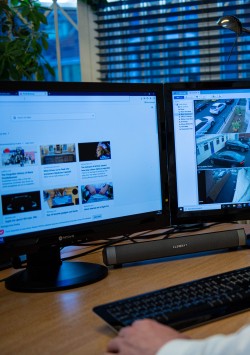
Battery Energy Storage System Warehouse Facility
Overview
Early fire detection is paramount for the client due to the volatile nature of the Lithium-Ion battery storage environment. Early detection can prevent fires or explosions, ensuring the safety of personnel and equipment. Each battery chemistry reacts differently to temperature variations, affecting factors such as capacity, cycle life, charging efficiency, and overall safety.
Situation

Our client, a large-scale renewable energy operator, managing a BESS (Battery Energy Storage System) warehouse facility.
Early fire detection is paramount for the client due to the volatile nature of the Lithium-Ion battery storage environment. Early detection can prevent fires or explosions, ensuring the safety of personnel and equipment. Each battery chemistry reacts differently to temperature variations, affecting factors such as capacity, cycle life, charging efficiency, and overall safety.
The client required continuous monitoring of hotspots or abnormal temperature rises in batteries to identify signs of overheating.
Solution

Zicam installed thermal imaging cameras strategically positioned to monitor critical points within the warehouse. The deployment of thermal cameras on site enhanced operational efficiency, safety, and maintenance practices across site, including the below advantages
Results

Continuous Monitoring: Thermal imaging CCTV provides round-the-clock surveillance of battery systems, ensuring that any temperature fluctuations are detected immediately, which is crucial for preventing thermal runaway.
Early Detection of Issues: By identifying hotspots or abnormal temperature changes, thermal imaging can alert operators to potential failures before they escalate, enhancing safety.
Non-Invasive Surveillance: These systems allow for the monitoring of battery performance without interrupting their operation, making them ideal for continuous processes like those in electric vehicles or energy storage facilities.
High-Resolution Imaging: Modern thermal cameras offer high-resolution imaging, allowing for detailed analysis of the battery's thermal profile and helping to pinpoint specific areas of concern.
Integration with Security Systems: Thermal imaging CCTV can be integrated with existing security systems, providing a comprehensive safety and monitoring solution that includes both thermal and visual surveillance.
Data Logging and Analysis: Thermal CCTV systems can record temperature data over time, which can be invaluable for analysing trends, assessing battery health, and informing maintenance schedules.
Remote Access: Many modern thermal imaging systems offer remote monitoring capabilities, enabling operators to check on battery conditions from anywhere, which is especially useful for large installations.
Cost-Effectiveness: By preventing battery failures and potential accidents, thermal imaging can lead to significant cost savings in terms of repairs, insurance, and downtime.
Versatility in Applications: These systems can be used in various settings, including electric vehicle charging stations, renewable energy facilities, and manufacturing plants, making them adaptable to different operational needs.
Improved Compliance: Utilising thermal imaging CCTV can help organizations meet safety and regulatory compliance requirements by providing documentation of consistent monitoring efforts.